
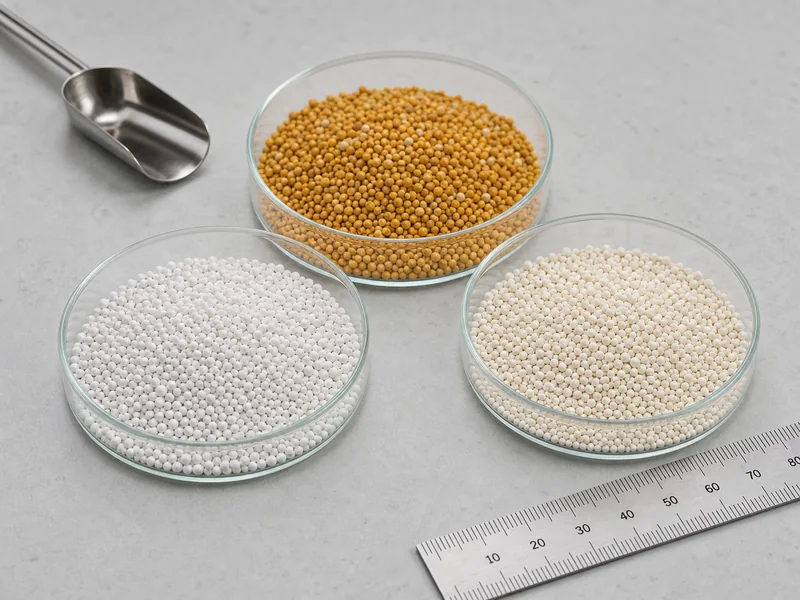
Differences Between Four Types of Grinding Media
YSZ, ceria-stabilized zirconia, zirconium silicate and zirconia-alumina composite beads are four types of grinding media, they are not interchangeable. The right choice depends on purity, energy demand, viscosity, target fineness, acceptable elemental pickup and total process cost.
This comparison explains where each media type fits and which grinding principles should guide a controlled production trial.
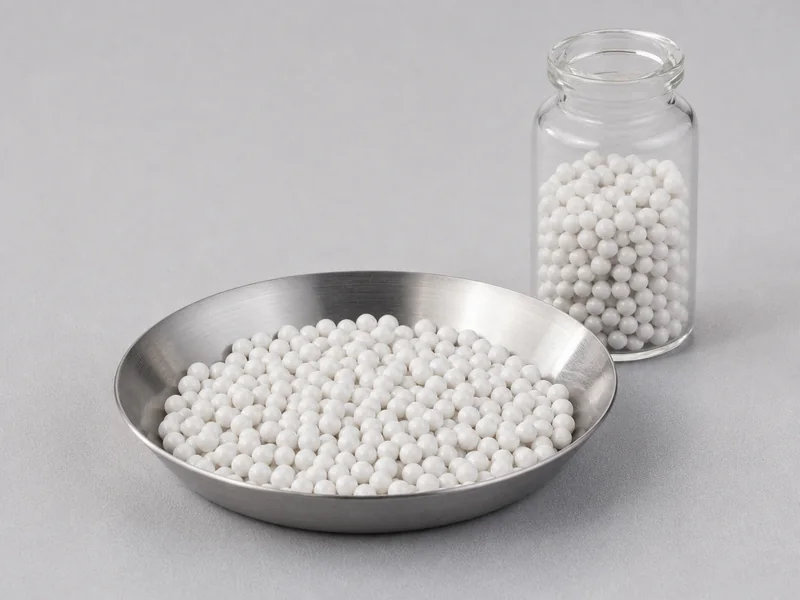
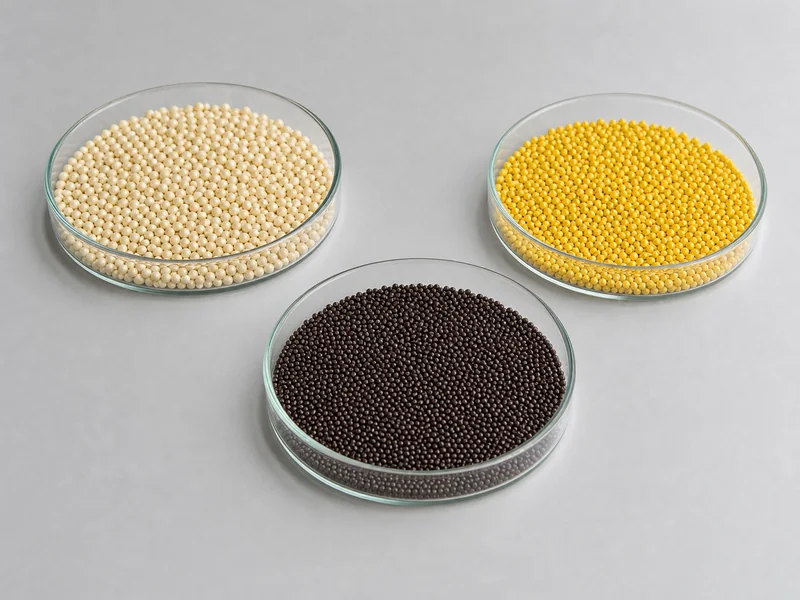
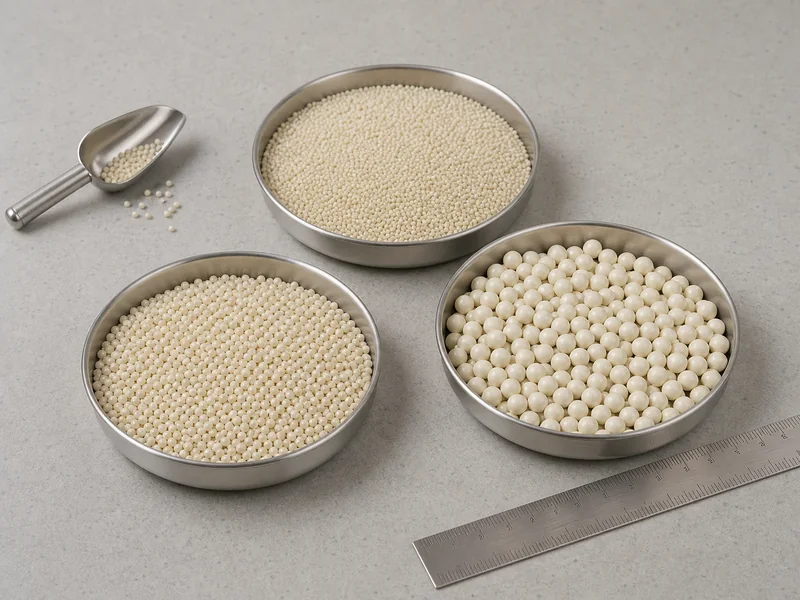
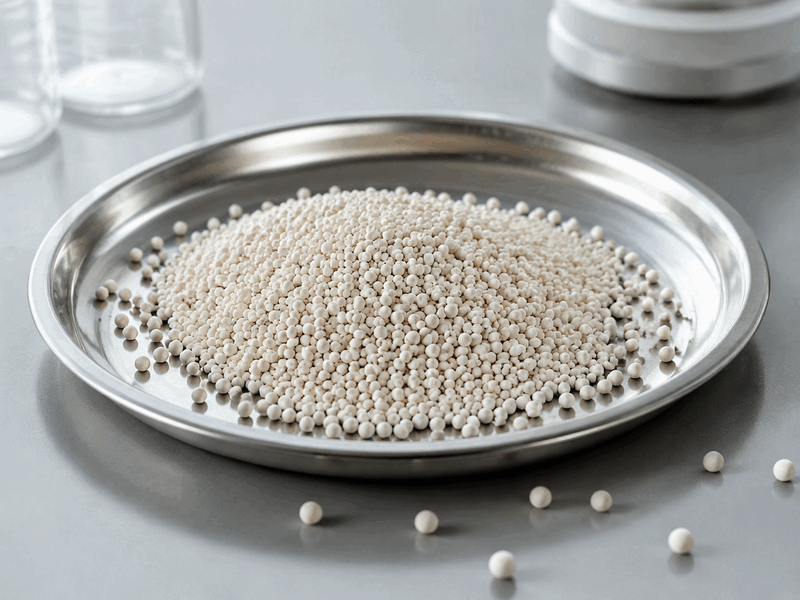
Four Media Types at a Glance
Use this table as a screening tool. Grade-specific specifications and controlled trials remain necessary for final approval.
| Property | YSZ Beads | Ce-TZP Beads | Zirconium Silicate Beads | Zirconia-Alumina Composite Beads |
|---|---|---|---|---|
| Material | Yttria-stabilized zirconia | Ceria-stabilized zirconia | Zirconium silicate, often called “65 zirconia beads” | Al₂O₃ + ZrO₂ composite ceramic, commonly grouped with ZTA media |
| Typical density | ≥ 6.0 g/cm³ | Up to approx. 6.2 g/cm³ | Approx. 4.0 g/cm³ | Approx. 3.0–3.8 g/cm³ |
| Standard / common size range | 0.1–20 mm | 0.3–3.2 mm | 0.3–3.0 mm standard | Approx. 0.4–10 mm |
| Typical appearance | White | Cream, yellow to dark brown | White to off-white | White, off-white or light ceramic shade depending on grade |
| Main advantage | Low wear, high purity and broad size availability | High density, toughness and strong energy transfer | Economical performance for routine industrial milling | Balanced hardness, toughness, wear resistance and purchase cost |
| Main limitation | Premium purchase cost | Cerium pickup and color compatibility may need review | Higher wear and contamination risk than premium zirconia | Lower density than zirconium silicate and possible aluminum pickup |
| Typical applications | Battery materials, electronic ceramics, MLCC slurries and fine technical dispersions | High-viscosity coatings, inks, resins, minerals and demanding dispersion duties | Industrial coatings, inks, minerals, paper fillers and agrochemical suspensions | Abrasive minerals, ceramic raw materials, coatings, pigments and glazes |
| Cost position | Premium | Premium, application-dependent | Economical | Intermediate / value-oriented |
Where Each Grinding Media Fits
The best media is the one that solves the limiting process problem without adding unnecessary cost, equipment load or contamination risk.
YSZ: Low Wear and High Purity
YSZ combines high density with low wear and the broadest size coverage in this comparison.
- Strong starting point for contamination-sensitive products
- Small sizes support fine and submicron dispersion
- Suitable for stable, long production campaigns
Ce-TZP: Dense and Tough
Ce-TZP offers very high density with a toughness-focused balance for resistant materials and long runs.
- Useful for hard or high-viscosity slurries
- Strong impact and fragmentation resistance
- Colour variation alone is not a quality verdict
Zirconium Silicate: Economical
Zirconium silicate provides practical medium-density performance when moderate wear and purity are acceptable.
- Lower entry cost for routine milling
- Well suited to coatings, inks, minerals and agrochemicals
- Not the first choice for strict contamination limits
Zirconia-Alumina: Balanced Value
This composite media combines alumina hardness with zirconia-assisted toughness at a lower density than zirconium silicate, YSZ and Ce-TZP media.
- High hardness and useful wear resistance
- Practical for minerals, ceramics, pigments and glazes
- Check aluminum pickup and required impact energy
Four Principles Behind the Comparison
Media chemistry matters, but bead diameter and operating conditions determine how that material performs inside the mill.
Density Is Not Wear
Higher density increases potential stress energy. Wear also depends on microstructure, toughness, speed and slurry chemistry.
Small Beads Add Contacts
They support fine dispersion only when the feed is small enough and the separator retains the full size distribution.
Large Beads Add Impact
They can address coarse particles and resistant slurries, but provide fewer contact points and may limit final fineness.
Compare Total Cost
Include media loss, milling time, energy, separator loss, equipment wear and rejected product—not only bead price.
Which Media Should You Trial First?
Start with the media family that addresses the main process risk, then refine bead diameter through comparable trials.
Purity and consistency lead
Use it when low contamination, low wear, fine particle targets and long-run stability outweigh the lowest media purchase price.
Viscosity or hard feed is the bottleneck
Use it when a resistant slurry needs high impact energy, toughness and stable operation in the available size range.
Routine production economics lead
Use it for dependable medium-duty grinding when moderate wear is acceptable and purity limits are not severe.
Hardness and budget must be balanced
Use it for abrasive minerals or ceramic feeds when harder media is needed, premium zirconia is unnecessary and aluminum pickup can be accepted or measured.
Confirm the Choice Under Equal Conditions
Density and price are useful screening data, not a complete selection method. Keep the mill, fill level, speed, slurry concentration and sampling method constant when comparing media.
Judge the result by accepted product and total process cost. For a fuller method, read our Guidance of Grinding Media Selection.
Record the same outputs
- Particle-size reduction and coarse tail
- Batch time and throughput
- Temperature and power draw
- Media loss and product contamination
- Separator stability and equipment wear
- Cost per accepted tonne
Frequently Asked Questions
Does higher density always grind faster?
No. Density can raise stress energy, but the result also depends on bead size, speed, viscosity, feed size and collision efficiency.
Can zirconia beads be judged by color?
Not by color alone. Density, roundness, microstructure, wear results and application compatibility are more meaningful.
When is zirconium silicate better value?
It is often economical in routine medium-duty milling where moderate wear is acceptable and strict purity or maximum energy transfer is unnecessary.
Where does zirconia-alumina composite media fit?
It is a value-oriented option for abrasive minerals, ceramics, pigments and glazes when alumina hardness and zirconia-assisted toughness matter more than high media density.
Need a Practical Starting Recommendation?
Share your mill type, separator opening, feed size, viscosity, target fineness, purity limit and current media. We can suggest a suitable media family and bead size for a controlled trial.
Request Technical Advice