
Zirconia-Alumina Composite Beads
Balanced ceramic grinding media for mineral, ceramic, coating, pigment and glaze processing where hardness, wear resistance and operating cost must be considered together.
Zirconia-alumina composite beads combine Al₂O₃ and ZrO₂ in a dense ceramic system. They provide a practical intermediate option when zirconium silicate is not sufficiently wear resistant but premium high-density zirconia is not required.
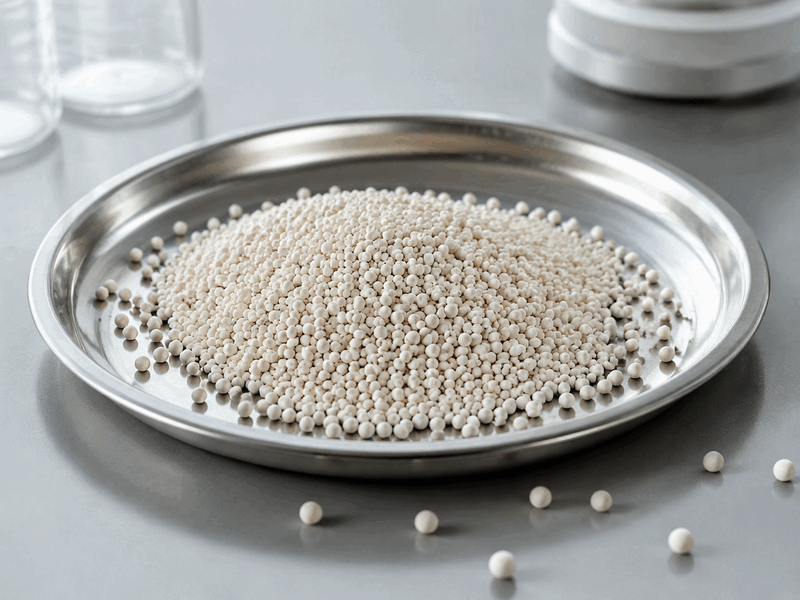
A Practical Balance of Hardness and Toughness
Zirconia-alumina composite beads, commonly grouped with zirconia-toughened alumina (ZTA) grinding media, combine the hardness of alumina with the toughness contribution of zirconia. The exact Al₂O₃-to-ZrO₂ ratio varies by grade, so chemistry and physical properties should be confirmed against the quotation, sample label and technical data sheet.
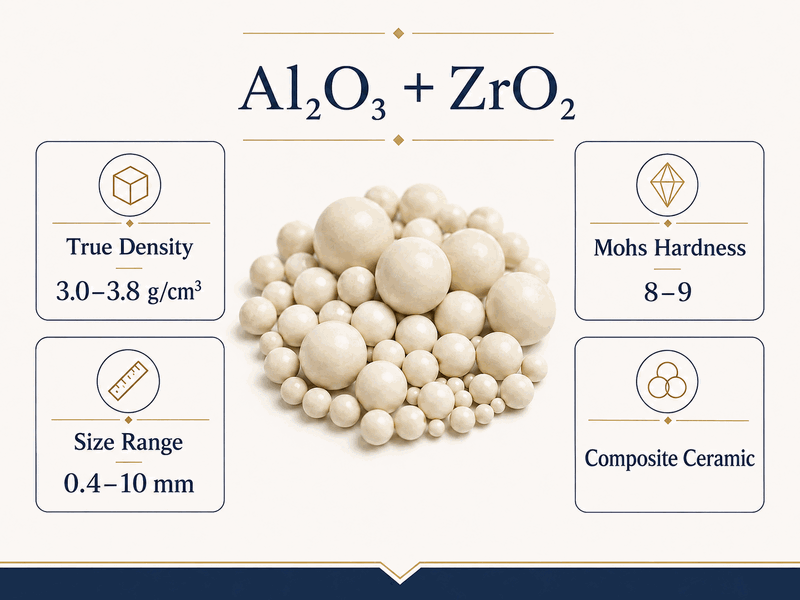
With a typical true density of approximately 3.0–3.8 g/cm³, this media provides controlled equipment loading while offering stronger wear and impact performance than many economical ceramic alternatives. It is commonly evaluated for ball mills, stirred mills and selected sand mills processing abrasive minerals, ceramic raw materials, coatings, pigments and glazes.
Designed for Balanced Industrial Performance
The useful value comes from the combined behaviour of hardness, toughness, density, surface quality and purchase cost inside the actual milling process.
Composite mechanical balance
The alumina-rich structure provides hardness, while zirconia contributes toughness and resistance to crack propagation under repeated impact.
High wear resistance
Dense sintering and a smooth spherical surface help control abnormal wear when bead size, loading and mill speed are correctly matched.
Useful intermediate density
A typical density of 3.0–3.8 g/cm³ balances impact energy, media charge weight and equipment loading.
Broad equipment compatibility
The commercial size range can be considered for compatible ball mills, stirred mills and selected sand mills.
Practical cost position
It can provide an economical starting point when premium zirconia density and ultra-low contamination are unnecessary.
Trial-based selection
Samples allow wear, throughput and possible aluminum pickup to be checked before production conversion.
Technical Data & Specifications
These values are reference ranges for the composite grades described on this page, not universal values for every zirconia-alumina formulation. The quotation, sample label and technical data sheet define the final grade-specific specification.
| Parameter | Typical Reference | Process Relevance |
|---|---|---|
| Material system | Al₂O₃ + ZrO₂ composite ceramic | Combines alumina hardness with zirconia-assisted toughness. |
| Typical composition | Al₂O₃ and ZrO₂; ratio varies by grade | Confirm chemistry when aluminum or zirconium pickup limits are important. |
| True density | Approx. 3.0–3.8 g/cm³ | Intermediate density balances impact energy and mill loading. |
| Mohs hardness | Approx. 8–9 | Supports grinding of abrasive mineral and ceramic feeds. |
| Toughness / impact resistance | Medium to high | Helps reduce chipping compared with more brittle ceramic media. |
| Wear resistance | High | Generally stronger than zirconium silicate, but grade and process conditions remain decisive. |
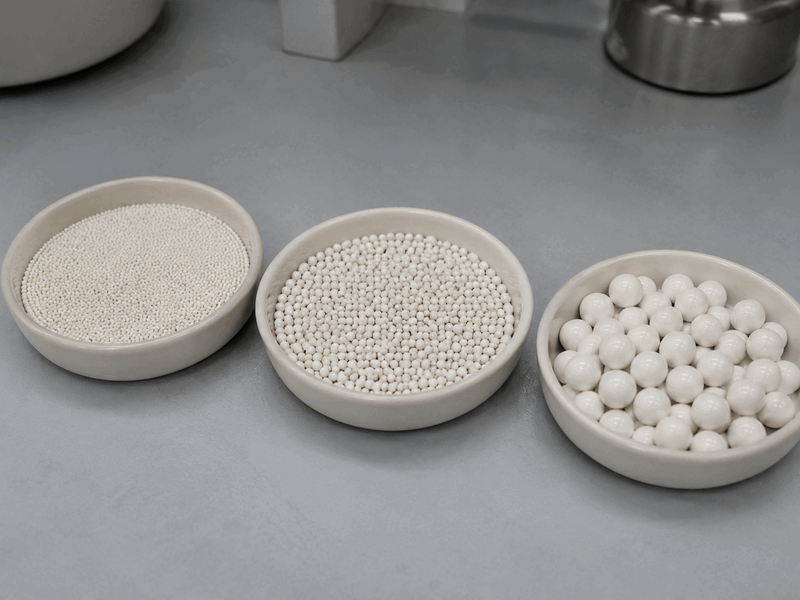
| Common size range | Approx. 0.4–10 mm | Covers fine, general-purpose and higher-impact grinding duties. |
| Recommended fineness | Micron-scale to demanding fine grinding | Final particle size depends on material, mill, separator and operating time. |
| Suitable equipment | Ball mills, stirred mills and selected sand mills | Separator clearance and operating energy must be checked before changing media. |
| Contamination consideration | Possible aluminum pickup | Run a controlled trial if product chemistry limits are strict. |
Actual wear rate, grinding efficiency and service life depend on the Al₂O₃/ZrO₂ ratio, sintering quality, bead size, feed abrasiveness, viscosity, mill speed, filling ratio, separator design, temperature and operating time. Request grade-specific data and test a sample before production conversion.
Choose the Size Around the Milling Duty
Smaller beads increase contact frequency, while larger balls provide more impact per contact. The selected diameter must remain compatible with the mill chamber, agitator and separator.
0.4–1.0 mm
Considered for fine dispersion in compatible stirred or sand mills where the separator can reliably retain small media.
1.0–3.0 mm
A practical range for mineral, coating, pigment and ceramic-slurry processes balancing contact frequency and impact.
3.0–10 mm
For compatible ball mills, stirred mills, coarse feed and first-stage grinding requiring stronger impact per contact.
Best Suited to Broad Industrial Grinding Duties
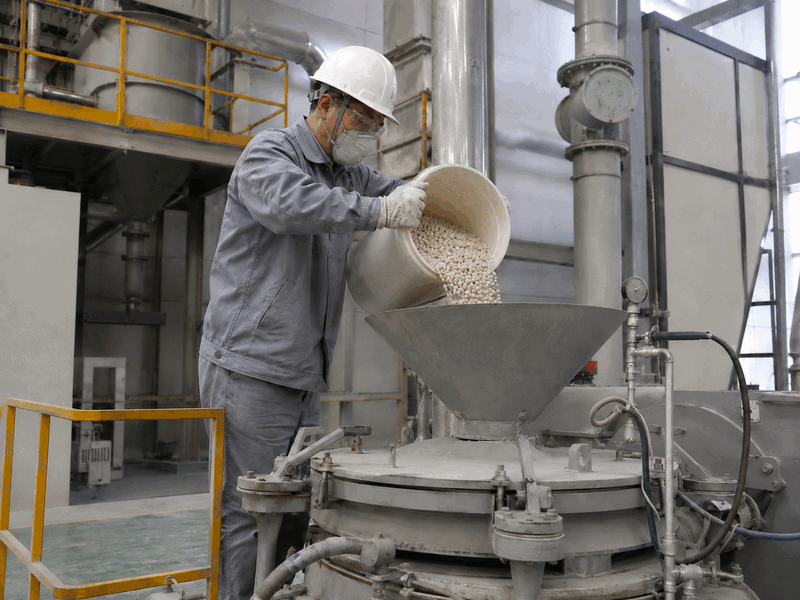
Zirconia-alumina composite media is most relevant when the process needs more wear resistance than general-purpose zirconium silicate without moving directly to premium high-density zirconia.
Non-metallic Minerals
Calcium carbonate, kaolin and abrasive mineral slurries.
Ceramic Raw Materials
Body materials, technical ceramic powders and production slurries.
Coatings & Pigments
Industrial coatings, pigment dispersions and colour systems.
Glazes & Ceramics
Ceramic glazes and related mineral-based formulations.
When Is This the Right Grinding Media?
Choose the bead from the complete process requirement rather than density or purchase price alone.
Choose zirconia-alumina composite media when:
- The feed is abrasive and zirconium silicate wears too quickly.
- Premium YSZ density and purity are not necessary.
- The process needs a practical balance of hardness, toughness and media cost.
- The equipment is designed for medium-density ceramic media.
- Possible aluminum pickup is acceptable or can be controlled.
Evaluate high-density zirconia instead when:
- Very low contamination is critical.
- High-viscosity slurry requires greater impact energy.
- The process uses very small media for submicron or nano grinding.
- Throughput and long-run stability matter more than initial media cost.
Practical rule: compare media by cost per tonne of acceptable product, not only by price per kilogram. Record media loss, cycle time, particle-size distribution, product contamination and rejected material under equal test conditions.
Confirm the Operating Window
A technically suitable bead can still perform poorly if the separator, loading, speed or chamber design is mismatched.
- Mill type, chamber volume and agitator design
- Separator screen or gap
- Current bead material, diameter and filling ratio
- Feed particle size, target D50/D90 and required throughput
- Slurry viscosity, solids loading and temperature
- Relevant aluminum, zirconium or total contamination limits
- Trial quantity and expected annual consumption
Common Questions About Zirconia-Alumina Composite Beads
What are zirconia-alumina composite beads?
They are ceramic grinding media made from Al₂O₃ and ZrO₂. The composite structure combines alumina hardness with improved toughness from zirconia. The exact composition varies by grade.
Are they the same as ZTA grinding beads?
Many products in this category are described as zirconia-toughened alumina (ZTA), but commercial names and Al₂O₃/ZrO₂ ratios are not always identical. Confirm the chemistry on the applicable data sheet.
How do they compare with zirconium silicate beads?
Zirconia-alumina composite media generally provides higher hardness, stronger wear resistance and better impact performance, but its purchase price is usually higher.
How do they compare with YSZ beads?
YSZ offers higher density, stronger grinding energy and lower contamination risk for demanding fine grinding. Zirconia-alumina composite beads are usually selected when balanced cost and performance matter more than maximum density or purity.
Which bead size should I select?
Selection depends on feed size, target fineness, mill energy and separator clearance. Use the smallest media that the separator can safely retain and that still provides enough impact for the feed.
Can I test a sample before placing a production order?
Yes. A controlled trial is recommended because wear, throughput and contamination depend on the actual formulation and mill conditions. Include your current media and operating data with the sample request.
Start With Your Process Information
Send the material, mill type, current media, separator opening, feed size, target particle size, contamination limit and expected quantity. We can help narrow the grade and bead-size options for a controlled trial.
Useful details to include
- Material and solids content
- Mill type and chamber volume
- Current grinding media and size
- Separator screen or gap
- Feed and target particle size
- Trial quantity or annual requirement