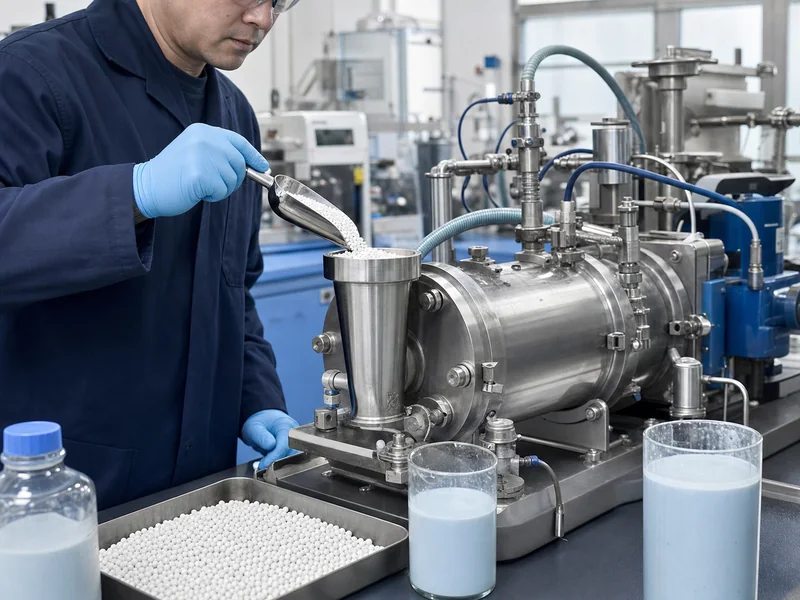
About Zirconia Beads Pro
Zirconia Beads Enhance Your Business
We manufacture and supply zirconia grinding beads with a practical focus: consistent material properties, suitable bead size selection, and support before you commit to production quantities.
Instead of assuming one bead works everywhere, we look at the mill, material, target particle size and contamination limits behind each inquiry.
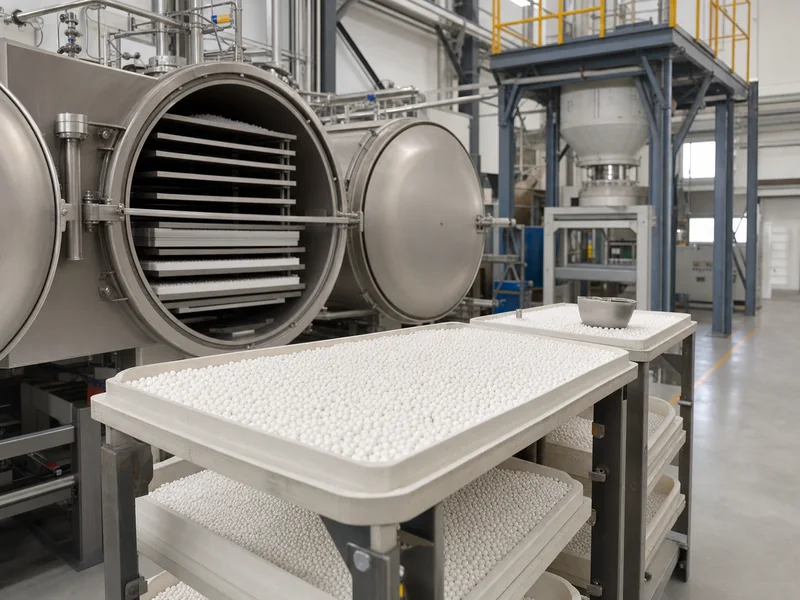
What customers need to know
Four Questions We Expect Before an Order
Grinding media affects efficiency, contamination and operating cost. These concerns deserve process-based answers, not broad promises.
01
Will the beads create unwanted contamination?
We discuss wear sensitivity, material purity and operating conditions, then recommend sample testing when contamination limits are critical.
02
Which bead size fits the mill and target?
Feed size, target fineness, viscosity, mill type and separator design all matter. A smaller bead is not automatically the better choice.
03
Can repeat batches remain consistent?
Raw-material control, sintering density, phase stability and grain distribution are the production parameters behind repeatable performance.
04
What happens if the trial result is different?
We review the actual test conditions and help adjust bead size or operating assumptions before scaling up. Performance always depends on the process.

Material and process control
Performance Begins Before the Beads Enter Your Mill
For YSZ beads, the objective is a dense, stable ceramic structure that can tolerate repeated impact and friction. We focus on the variables that influence wear and mechanical reliability.
- High-purity raw materials
- Controlled sintering
- Tetragonal phase stability
- Uniform grain distribution
- Stable bead geometry
- Batch-level checks
A lower-risk buying process
From Requirement to Repeat Order
A useful recommendation starts with enough process detail. Our preferred route is straightforward.
STEP 01
Define the target
Share the material, feed and target size, mill type, viscosity and contamination limits.
STEP 02
Select media
We narrow the material and bead-size range based on the available process information.
STEP 03
Test under real conditions
Use a sample or small order to compare grinding efficiency, wear and product quality.
STEP 04
Confirm the supply specification
Once the trial is stable, confirm size, quantity, packaging and repeat-order requirements.
Application support
Different Materials Create Different Milling Problems
Battery materials may prioritize contamination control. Coatings and inks often require efficient dispersion and color consistency. Pharmaceutical and nano-material processes can be especially sensitive to wear.

Start with process information
Tell Us What You Need the Mill to Achieve
Send the material, mill model, current media, feed size, target particle size and expected quantity. If some details are unknown, share what you have—we can begin there.