
Applications / Electronic Ceramics & MLCC
Controlled Ceramic Slurry Milling for More Consistent Electronic Components
Electronic ceramic milling must reduce agglomerates while protecting chemistry, particle-size distribution and slurry behaviour for downstream forming and sintering.
Low-wear YSZ media is commonly evaluated for dielectric and technical ceramic slurries where a coarse particle tail or gradual media-related contamination can create costly downstream variation.
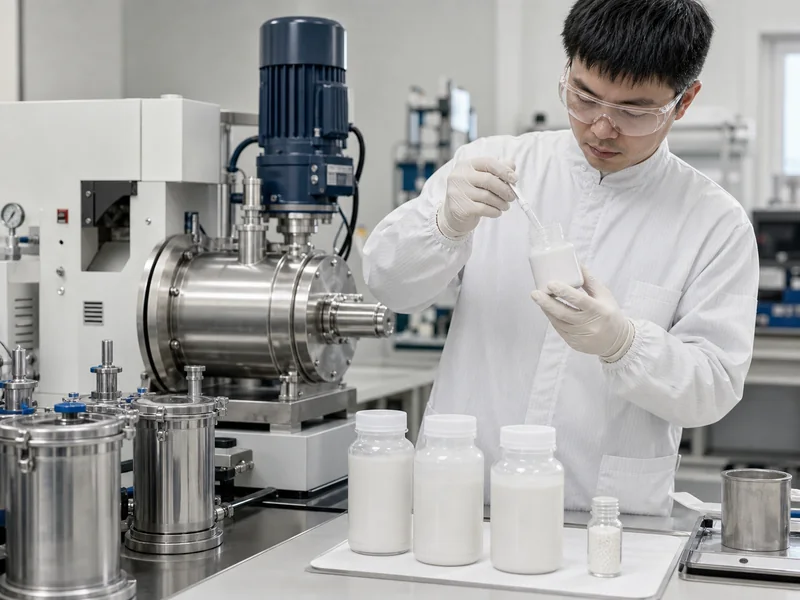
Why this application is demanding
Fine Powder Is Only One Part of the Requirement
For MLCC and related electronic ceramics, milling influences more than particle size. The slurry must remain suitable for dispersion, casting or printing and later thermal processing.
A
Coarse particles and agglomerates
A satisfactory D50 can still hide a coarse tail. Oversize particles may disturb thin-layer uniformity or contribute to local defects downstream.
B
Media and mill contamination
Wear products can change slurry chemistry gradually. Baseline and timed elemental checks help distinguish media, equipment and raw-material sources.
C
Rheology drift
Particle surface area, dispersant demand, temperature and fines generation can change viscosity even when the endpoint particle size appears acceptable.
D
Batch-to-batch variation
Changes in feed powder, bead population, separator condition or specific energy can move the slurry outside the qualified downstream window.
Process view
Connect Milling Conditions to Downstream Quality
Evaluate the slurry at the points where chemistry, particle distribution and processability can change.
Qualification matrix
What to Verify Before Production Scale
Set the acceptance criteria before the trial so the media decision is based on the complete ceramic process.
| Process objective | Potential failure mode | Useful trial evidence |
|---|---|---|
| Narrow particle-size distribution | D50 reaches target while D90, oversize residue or excessive fines remain outside the useful window. | Track D10, D50, D90 and an agreed oversize or sieve criterion at equal process time or specific energy. |
| Controlled chemistry | Media, chamber or rotor wear introduces elements that affect the formulation or later thermal behaviour. | Compare feed baseline with timed slurry samples for the elements relevant to the media and mill materials. |
| Stable slurry rheology | Viscosity or thixotropy changes as surface area, temperature or dispersant demand develops. | Record temperature, solids, viscosity method and timing together with PSD; do not compare viscosity without a fixed method. |
| Reliable media separation | Small beads escape, pack the screen or create an unstable pressure trend. | Verify separator opening, bead-size distribution, pressure and retained-media condition before sizing down. |
| Downstream consistency | A slurry that looks acceptable after milling behaves differently during forming, drying or sintering. | Include the customer’s relevant forming and downstream quality checks in the final qualification. |
Media starting point
Why YSZ Is Commonly Evaluated First
Yttria-stabilized zirconia combines high density, a fine ceramic microstructure and a broad size range. In electronic ceramic slurries, it is normally considered when wear stability and chemistry control matter more than minimum media price.
Application reasons to consider YSZ
The selection should be tied to measurable acceptance criteria.
- Small-media options down to 0.1 mm
- High density for efficient energy transfer
- White, dense ceramic structure
- Controlled surface and spherical geometry
- Lower wear risk than economical media
- Samples for formulation-specific testing
Diameter strategy
Small Media Helps Only When the Complete Mill Supports It
Electronic ceramic duties often benefit from high contact frequency, but reducing bead size without checking feed condition and separation can create a new process problem.
Feed readiness
Pre-reduce large agglomerates
Very small beads are less effective when the incoming feed contains particles too large for the available impact energy. Pre-dispersion may be required.
Separator retention
Respect the minimum media size
Confirm the screen or gap, bead-size distribution and mill manufacturer’s recommendation before selecting 0.1–0.8 mm media.
Process stability
Watch viscosity, heat and flow
Smaller media increase population and contact area. Filling ratio, cooling and circulation may need adjustment rather than direct size substitution.
Quality-control handoff
Define the Result Beyond the Mill
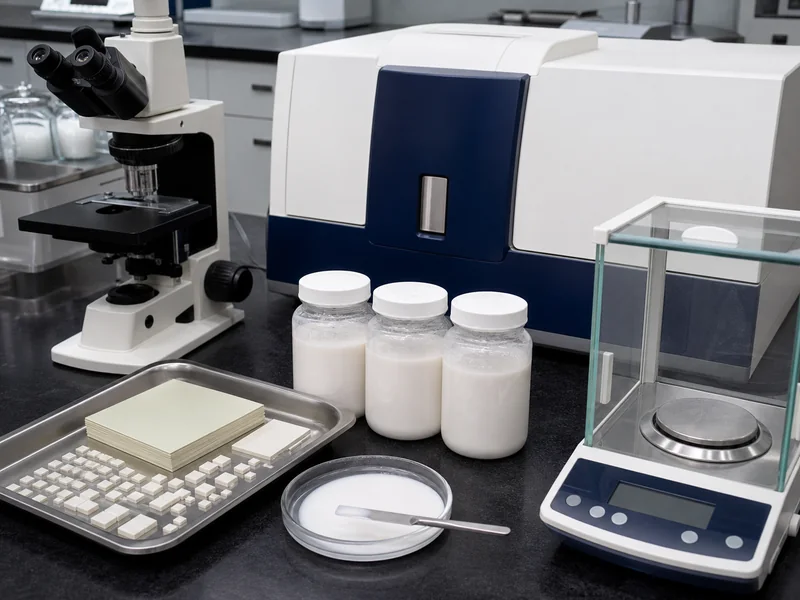
The media trial should end only after the slurry passes the measurements that matter to the next production step.
- D10 / D50 / D90 and coarse tail
- Viscosity using a fixed method
- Solids content and temperature
- Relevant elemental contamination
- Media loss and separator deposits
- Forming or coating uniformity
- Drying behaviour where relevant
- Customer-defined fired properties
Recommended validation
A Four-Stage Trial for Lower Qualification Risk
Keep media selection, milling conditions and downstream acceptance connected from the beginning.
01
Set the baseline
Document feed chemistry, PSD, slurry formulation, current media result and acceptable contamination.
02
Fix equal conditions
Control solids, loading, speed, flow, temperature, sampling intervals and analysis methods.
03
Measure trends
Track PSD, rheology, contamination and process stability across representative operating time.
04
Confirm downstream fit
Approve the media only after the slurry and relevant forming or fired-product checks are acceptable.
Application brief
Information that helps us review the process
- Ceramic powder chemistry
- Solvent and additives
- Solids content / viscosity
- Feed and target PSD
- Mill and chamber volume
- Separator type / clearance
- Current media and size
- Relevant contamination limits
Start with what you know
A Useful Review Does Not Need Perfect Data
Mill model, current media, feed PSD and target result are usually enough to narrow the first sample range. Unknown details can be clarified before the trial.
Review Technical Guidance
Sample & application support
Evaluate YSZ in Your Electronic Ceramic Slurry
Share the powder system, mill, separator, current bead, feed PSD and target result. We can help identify a practical size range and controlled trial plan.