
Products / Mid-density ceramic media
Zirconium Silicate Beads
Cost-efficient, mid-density grinding media for routine industrial wet milling where dependable dispersion and practical operating cost matter more than ultra-low wear.
Often called “65 zirconia beads” in the trade, zirconium silicate sits between glass beads and high-purity zirconia in density, impact energy and price. It is widely evaluated for coatings, inks, non-metallic minerals and agrochemical formulations.
≈ 65% ZrO₂
Common trade designation
≈ 4.0 g/cm³
Mid-density media
0.3–3.0 mm
Standard commercial range
Cost-efficient
For routine, high-volume milling
The economic case
A Practical Step Between Glass and High-Purity Zirconia
The purchase price is only one part of the decision. The right economical choice must still deliver acceptable throughput, wear, product quality and screen compatibility.
01
More impact than glass beads
A specific gravity around 4.0 g/cm³ provides more kinetic energy than lower-density glass media of the same diameter.
02
Lower media cost
Where moderate media wear and elemental pickup are acceptable, zirconium silicate can reduce charging and replenishment cost.
03
Useful at production scale
The 0.3–3.0 mm range covers fine dispersion, mainstream milling and coarse pre-grinding in common equipment.
A transparent selection guide
When Zirconium Silicate Is—and Is Not—the Economical Choice
Using a lower-cost bead in the wrong process can increase cycle time, contamination or media consumption. These boundaries make the first selection more realistic.
Good starting point
Routine industrial formulations
- Low- to medium-viscosity slurries
- Moderate feed hardness and particle size
- Practical rather than ultra-strict purity limits
- Large-volume milling where media budget matters
- Mills designed around common 0.8–2.0 mm media
Evaluate high-density zirconia
Demanding wear or purity conditions
- Very low contamination or elemental pickup limits
- Hard, abrasive feed over long high-energy runs
- High-viscosity slurry that lighter media cannot penetrate
- Nano-grinding requiring very small media
- Yield loss matters more than bead replacement cost
Practical rule: choose zirconium silicate because its performance is sufficient—not simply because its unit price is lower. Where wear, purity or high-energy efficiency dominates, compare it with YSZ or Ce-TZP under equal conditions.
Technical reference
Typical Product Parameters
These are typical industry references for “65 zirconia” media. The grade-specific quotation, sample label and data sheet define the final supply specification.
| Parameter | Typical reference | Process relevance |
|---|---|---|
| Material system | Zirconium silicate ceramic media | A mid-density system positioned between glass beads and high-density stabilized zirconia. |
| Typical chemistry | Approximately 65 wt% ZrO₂, balance mainly SiO₂ | Composition varies by grade; request the applicable data sheet when chemistry limits matter. |
| Specific gravity | Approximately 4.0 g/cm³ | More impact than glass, while lighter and less costly than YSZ or Ce-TZP. |
| Bulk density | Approximately 2.4 kg/L | Useful for estimating charge weight from chamber volume. |
| Nominal sizes | 0.3–3.0 mm standard | Covers fine, general-purpose and coarse wet-milling duties. |
| Special sizes | 4.0–5.0 mm, with larger options by request | For compatible coarse grinding, older equipment or vertical mills. |
| Shape and surface | Spherical, dense ceramic surface | Supports circulation and repeatable contact when matched to the separator. |
| Appearance | Off-white to pale ivory | Normal shade differences should be assessed with chemistry, density and wear data. |
| Recommended process | General wet grinding and dispersion | Commonly selected for coatings, inks, minerals, pigments and agrochemical SC. |
Actual wear, throughput and service life depend on bead grade, abrasiveness, viscosity, mill speed, filling ratio, separator, temperature and run time. Validate with the actual formulation before production conversion.
Size selection
Three Practical Commercial Size Bands
Smaller beads increase contact frequency; larger beads increase impact and penetration. Always confirm that the separator can retain the selected diameter.
Micro / fine series
0.3–0.8 mm
Common grades: 0.3–0.4, 0.4–0.6 and 0.6–0.8 mm.
Dense contact points support submicron dispersion in low- and medium-viscosity slurries.
Typical applications: pesticide SC, water-based coatings, printing inks and colour pastes.
Standard / mainstream series
0.8–2.0 mm
Common grades: 0.8–1.0, 1.0–1.2, 1.2–1.4, 1.4–1.6, 1.6–1.8 and 1.8–2.0 mm.
The mainstream range balances impact, shear area, common separator clearances and media consumption.
Typical applications: industrial coatings, calcium carbonate, kaolin, titanium dioxide and general paints.
Large / coarse series
2.0–3.0 mm
Common grades: 2.0–2.2, 2.2–2.5 and 2.5–3.0 mm.
Greater mass helps overcome larger feed particles or higher slurry resistance.
Typical applications: vertical sand mills, first-stage grinding and higher-viscosity pre-dispersion.
Separator check: do not choose bead diameter from target fineness alone. Screen opening, rotor speed, chamber geometry and current media load must also be reviewed.
Product and production views
From Size Selection to Bulk Milling
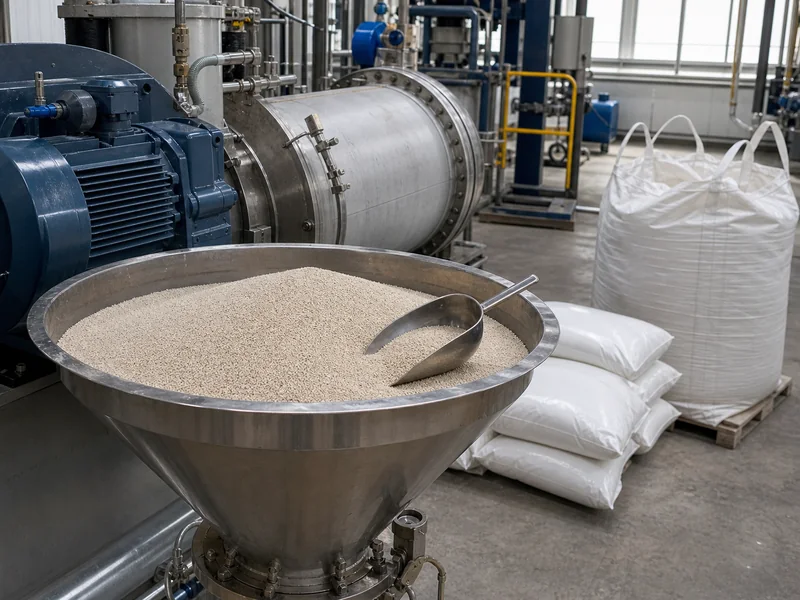
The images show the commercial size concept and the production environment in which economical media selection matters.
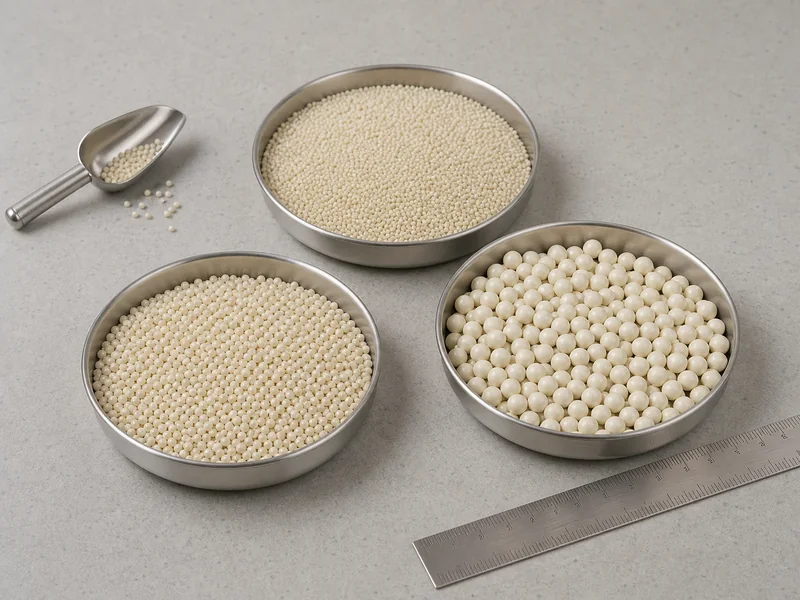
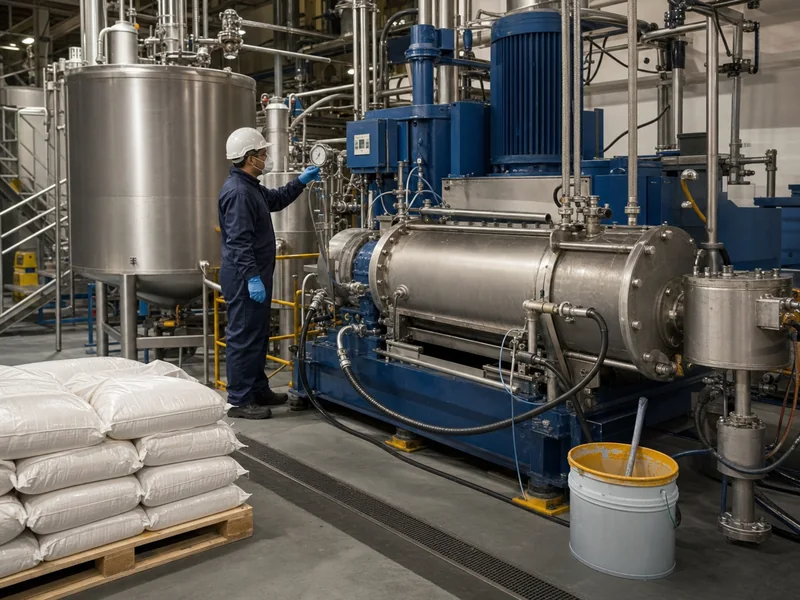
All photographs are product and application illustrations. Confirm actual dimensions, shade and packaging against the supplied sample and order specification.
Common applications
Best Suited to Broad Industrial Duties
Zirconium silicate is most compelling where the product can tolerate its wear profile and the process benefits from a lower media investment.
01
Paints & Coatings
Water-based coatings, industrial paint and pigment dispersion with moderate contamination requirements.
02
Printing Inks
Routine ink and colour-paste production balancing reliable dispersion with cost control.
03
Non-metallic Minerals
Calcium carbonate, kaolin and titanium-dioxide processing in compatible continuous equipment.
04
Agrochemicals
Suspension concentrates, especially low- to medium-viscosity systems using small media.
Total operating cost
Compare Cost per Tonne, Not Price per Kilogram
A low purchase price does not guarantee a lower milling cost. Media consumption, cycle time, rejected product and cleaning frequency can outweigh the initial saving.
A short controlled trial should record both particle-size results and media lost during the same production time.
Useful trial comparison
- Hold conditions constant: formulation, mill speed, filling ratio, temperature and flow.
- Measure the result: throughput, D50/D90, viscosity and dispersion quality.
- Check wear: bead weight loss, slurry contamination and screen deposits.
- Calculate the real cost: media consumed per tonne of acceptable product.
Sample & technical review
Check Whether “65 Zirconia” Fits Your Process
Send the material, viscosity, mill type, current media, separator opening, feed size, target fineness and expected volume. We can help narrow the size and decide whether zirconium silicate is a sensible economic starting point.
Include if available
- Product and solids content
- Mill type and chamber volume
- Separator screen or gap
- Current media material and size
- Feed and target particle size
- Purity or contamination limit
- Monthly or annual consumption