
Applications / Minerals & Paper
Wet Grinding Media for Consistent Output at Industrial Scale
For calcium carbonate, kaolin and other industrial-mineral slurries, the useful result is not the lowest bead price or the smallest D50 alone. Throughput, media consumption, energy, slurry handling and downstream quality must work together.
We help select a practical media family and diameter for controlled trials—starting with the mill, separator, mineral feed and cost per accepted tonne.
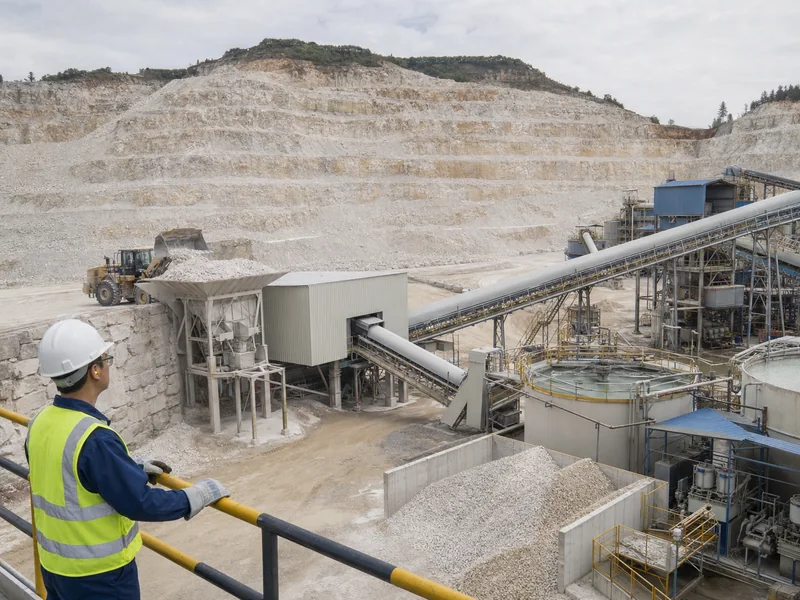
Where fine grinding fits
Optimize the Complete Mineral-to-Slurry Route
Stirred-media grinding is one step in a larger process. Feed preparation, classification and slurry chemistry determine whether the media can deliver useful breakage efficiently.
Typical material groups
Different Minerals Place Different Limits on the Media
Mineral hardness, feed top size, slurry solids and finished-product specification should define the trial—not application name alone.
CALCIUM CARBONATE
High-volume GCC and limestone
Production economics, white-product cleanliness and stable slurry handling usually dominate the decision.
- Paper filler and coating grades
- Paint, plastic and construction minerals
- Watch viscosity and excess fine fraction
KAOLIN & CLAY
Shape, dispersion and colour control
Clay systems may respond strongly to solids, dispersant and shear history as the target fineness is approached.
- Paper coating and speciality clay
- Control coarse residue and rheology
- Check media-related colour pickup
MINERAL PIGMENTS
TiO₂ and speciality dispersions
Higher-value or contamination-sensitive products may justify denser, lower-wear media after a controlled comparison.
- Titanium-dioxide dispersion
- Functional mineral fillers
- Qualification may favour YSZ over silicate
Production economics
Judge Cost per Accepted Tonne
A lower purchase price can be cancelled by higher additions, slower milling, more screen deposits or unstable downstream handling.
MEDIA
Consumption and carryover
Record make-up additions, bead condition and separator losses over enough runtime to show a trend.
ENERGY
Specific energy to endpoint
Compare power and throughput at the same useful particle-size and rheology window.
UPTIME
Screen and chamber stability
Deposits, bead leakage, fragments or frequent cleaning can outweigh small purchase-price savings.
QUALITY
Accepted product yield
Include coarse residue, colour, viscosity, filtration and downstream application failures.
Control variables
Six Factors Usually Move the Result Together
Hold these conditions stable when comparing media so the trial isolates a real media effect.
A
Feed size and mineral hardness
Small media provides frequent contacts but cannot efficiently replace upstream crushing or removal of oversized feed.
B
Solids, dispersant and rheology
Poor slurry mobility reduces useful bead movement; over-grinding can increase surface area and additive demand.
C
Target PSD and coarse tail
D50 alone may conceal oversize particles or an excessive fine fraction that affects filtration and application behaviour.
D
Mill and separator design
Chamber geometry, tip speed, filling and the minimum bead size supported by the separator set practical limits.
E
Colour and contamination limits
White or high-value grades may require tighter control of media pickup, mill wear and cross-batch residues.
F
Downstream dewatering
Particle-size distribution and surface condition can influence filtration resistance, drying load and slurry transport.
Media selection
Use the Lowest Total-Cost Media That Meets the Product Window
General mineral duties often favour economical zirconium silicate. Tighter wear, purity or small-media requirements can justify YSZ; dense Ce-TZP is reserved for specific hard or viscous duties.
ECONOMICAL GENERAL DUTY
Zirconium Silicate
A practical first comparison for suitable high-volume mineral and paper-pigment slurries where moderate wear is acceptable.
- Approx. 4.0 g/cm³ density
- Standard 0.3–3.0 mm range
- Balance low purchase cost with actual consumption
Review zirconium silicate →
LOWER WEAR / SMALL MEDIA
YSZ Beads
Consider for whiter, higher-value or contamination-sensitive grades and when small-media retention is supported.
- YSZ sintering density ≥ 6.0 g/cm³
- Broad 0.1–20 mm supply range
- Higher price must be justified by throughput or wear
Review YSZ beads →
HARD / VISCOUS DUTY
Ce-TZP Beads
Dense media for selected hard, resistant or high-viscosity feeds where stronger stress energy is genuinely useful.
- Approx. 6.2 g/cm³ density
- Standard 0.3–3.2 mm range
- Not the default economic choice for soft GCC
Review Ce-TZP beads →
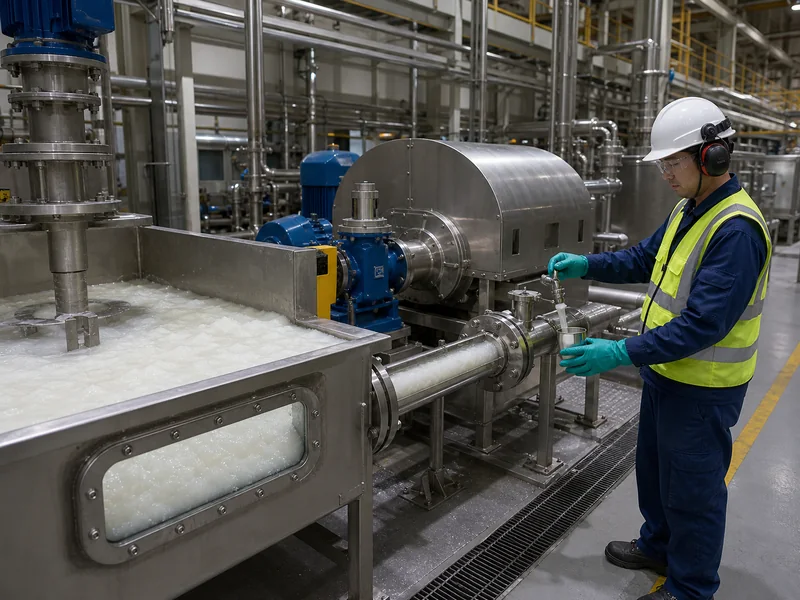
Paper-mill process boundary
Separate Fibre Refining from Mineral-Pigment Grinding
Paper mills may refine cellulose fibres mechanically while also preparing or purchasing finely ground mineral pigments. These operations influence the same finished sheet, but they use different equipment and wear systems.
- GCC and kaolin fineness
- Coarse coating residue
- Slurry solids and viscosity
- Colour and brightness impact
- Filter and screen loading
- Coating surface uniformity
Diameter strategy
Match Bead Size to Feed Top Size, Viscosity and Separator
These ranges are trial starting points, not universal prescriptions. Confirm the full supplied bead distribution against the mill manufacturer’s separator limit.
0.3–0.8 mm
Fine finishing
For well-premixed, low- to moderate-viscosity feeds when high contact frequency and reliable small-bead retention are available.
0.8–2.0 mm
General continuous milling
A common practical comparison band balancing contact frequency, impact and separator compatibility across many mineral slurries.
2.0–3.0 mm+
Coarser or resistant feed
Consider when larger stress energy is needed and the mill, viscosity and target product can use it efficiently.
Controlled comparison
Record the Complete Result at Equal Conditions
A useful trial links grinding performance, media condition and downstream behaviour.
| Measure | Keep comparable | Decision signal |
|---|---|---|
| Particle size | Feed lot, solids, sampling time and measurement method | D10 / D50 / D90, coarse residue and excessive fines |
| Productivity | Mill configuration, filling, speed, flow and temperature | Accepted tonnes per hour and specific energy |
| Slurry handling | Dispersant, water chemistry and viscosity method | Pressure, viscosity, pumping and stability |
| Media behaviour | Initial charge, make-up method and separator | Weight loss, breakage, leakage and deposits |
| Cleanliness | Mill condition and unmilled feed baseline | Relevant elemental pickup, colour and brightness |
| Downstream result | Same filtration, drying or coating test | Filterability, yield and finished-surface acceptance |
Recommended validation
A Four-Stage Production Trial
01
Characterize the feed
Record mineral source, hardness, feed PSD, solids, viscosity, impurities and current production result.
02
Set the media candidate
Confirm chemistry, nominal range, separator clearance, filling and a measurable comparison period.
03
Track process trends
Measure throughput, energy, pressure, temperature, PSD, slurry handling and media additions.
04
Calculate accepted cost
Include wear, maintenance, yield and downstream quality—not only the bead purchase price.
Sample & application support
Compare Media on Your Mineral, Mill and Cost Target
Share the mineral, feed PSD, solids, viscosity, mill, separator, current bead, target fineness and annual consumption. We can help define a practical starting sample and comparison checklist.
Useful details to include
- Mineral and hardness
- Feed / target PSD
- Solids and viscosity
- Mill and chamber
- Separator opening
- Current media / size
- Throughput and energy
- Annual consumption
- Colour / purity limits
- Downstream test