
Products / High-density YSZ grinding media
Yttria Stabilized Zirconia Beads
Dense ceramic grinding media for high-energy wet milling, fine grinding, and dispersion processes where wear, contamination, and repeatable impact energy matter.
YSZ combines a high sintered density with a stabilized tetragonal zirconia structure. The appropriate bead size should be selected based on the mill, separator, feed material, and target particle size.
≥ 6.0 g/cm³ Sintered density
0.1–20 mm Nominal size range
t-ZrO₂ Stabilized tetragonal phase
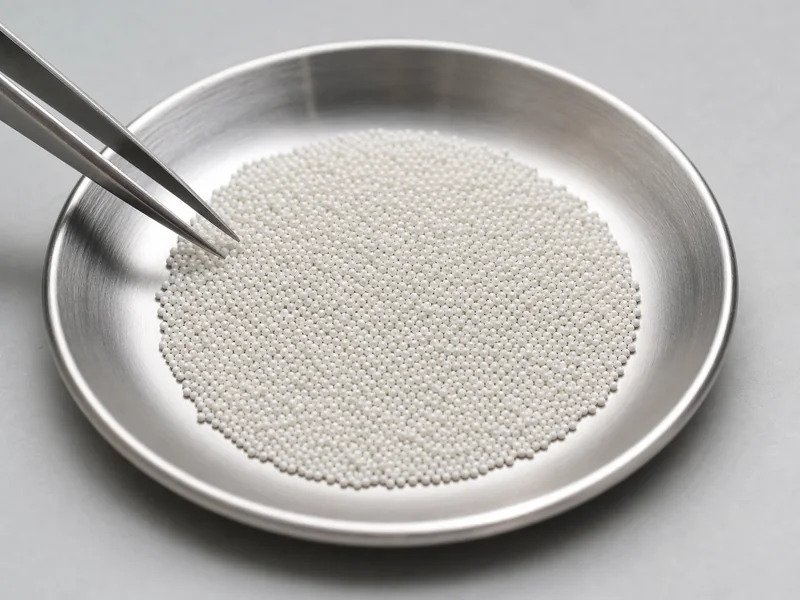
Standard product data
Technical Parameters
The table focuses on the specifications currently supported by our product information. Size-specific tolerances and additional test data are confirmed with the quotation or technical data sheet.
| Parameter | Standard specification | Process relevance |
|---|---|---|
| Material system | Yttria-stabilized zirconia (YSZ) | Dense zirconia ceramic selected for demanding wet-milling conditions. |
| Stabilizer | Y₂O₃ (yttria) | Supports stability of the zirconia structure during repeated impact and friction. |
| Crystal phase | Stabilized tetragonal ZrO₂ | Phase stability contributes to structural toughness and wear behaviour. |
| Sintered density | ≥ 6.0 g/cm³ | Higher media density transfers more impact energy than lower-density ceramic media. |
| Nominal bead sizes | 0.1–20.0 mm | Allows matching to separator clearance, mill design, feed size and target fineness. |
| Shape | Spherical | Supports predictable movement, contact and loading inside the milling chamber. |
| Surface | Dense, smooth ceramic surface | Helps reduce abnormal surface wear when used within suitable operating conditions. |
| Colour | White | Makes visual inspection and handling straightforward. |
| Recommended process | High-energy wet milling and dispersion | Commonly evaluated where grinding efficiency and contamination control are important. |
| Supply verification | Technical data and samples available | Enables process testing before committing to production quantities. |
Actual wear rate, grinding efficiency and service life depend on mill type, speed, bead loading, formulation, temperature, separator design and operating time. Request size-specific data for your evaluation.
Product advantages
Designed to Reduce Process Variability
The useful advantage of YSZ is not a single headline number. It is the combination of density, microstructure, geometry and size selection working inside the actual milling process.
High impact energy
A sintered density of at least 6.0 g/cm³ supports efficient energy transfer in suitable high-energy mills.
Low contamination risk
A dense zirconia structure is intended to limit media wear and unwanted contamination relative to less durable media.
Resistance to fragmentation
Stabilized tetragonal zirconia and controlled sintering support toughness under repeated impact.
Consistent bead geometry
Spherical shape and a smooth surface support stable circulation and contact within the chamber.
Broad size selection
Sizes from 0.1 to 20 mm make it possible to balance fine dispersion with the impact required for coarser feeds.
Trial before scale-up
Samples and technical review reduce the risk of selecting media from density or price alone.
Size selection
Choose the Bead Around the Milling Task
Smaller beads provide more contact points for fine dispersion. Larger beads provide greater impact per contact. Separator compatibility must be checked before any size change.
Fine media
0.1–0.8 mm
Evaluated for fine grinding and dispersion where the mill and separator are designed for small media.
Shown: nominal 0.5 mm illustration — not to scale
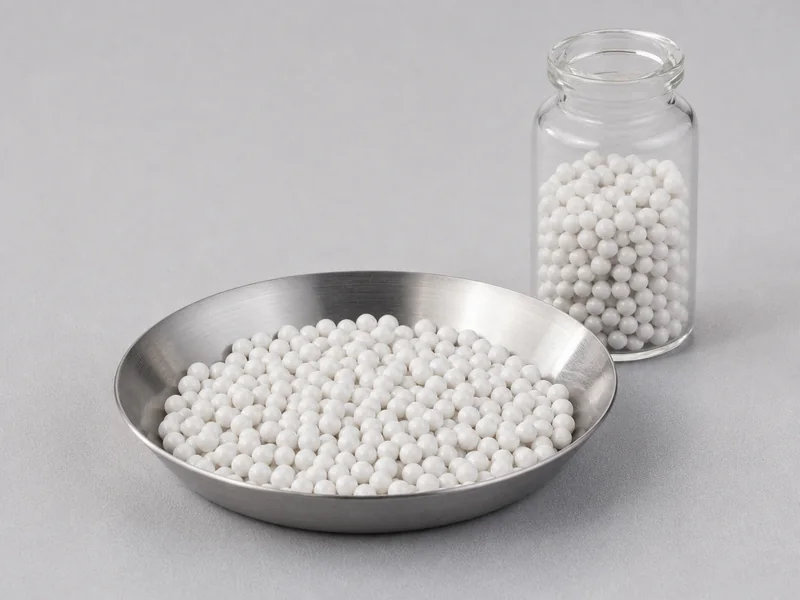
General range
0.8–3.0 mm
A practical range for many wet-milling tasks requiring a balance of contact frequency and impact.
Shown: nominal 2 mm illustration — not to scale
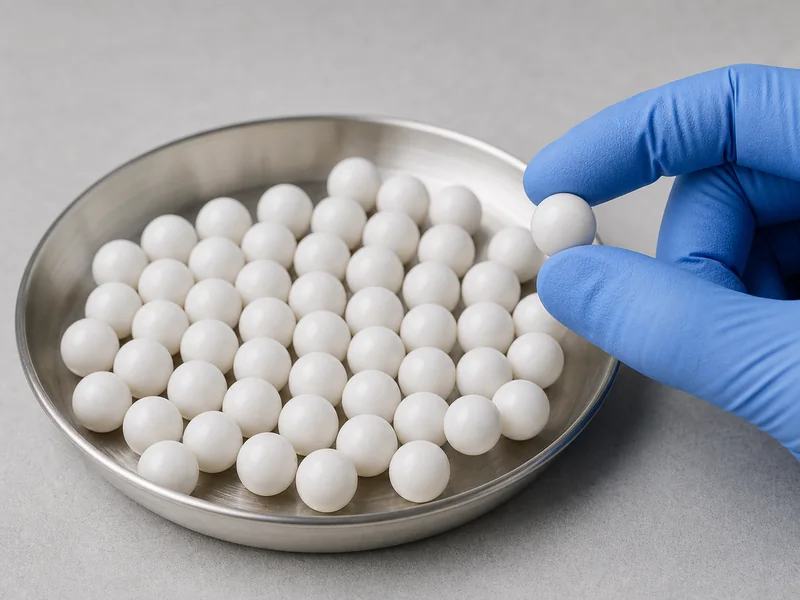
Higher impact
3.0–10.0 mm
Considered for coarser feed or equipment that requires larger media and higher impact per contact.
Shown: nominal 10 mm illustration — not to scale
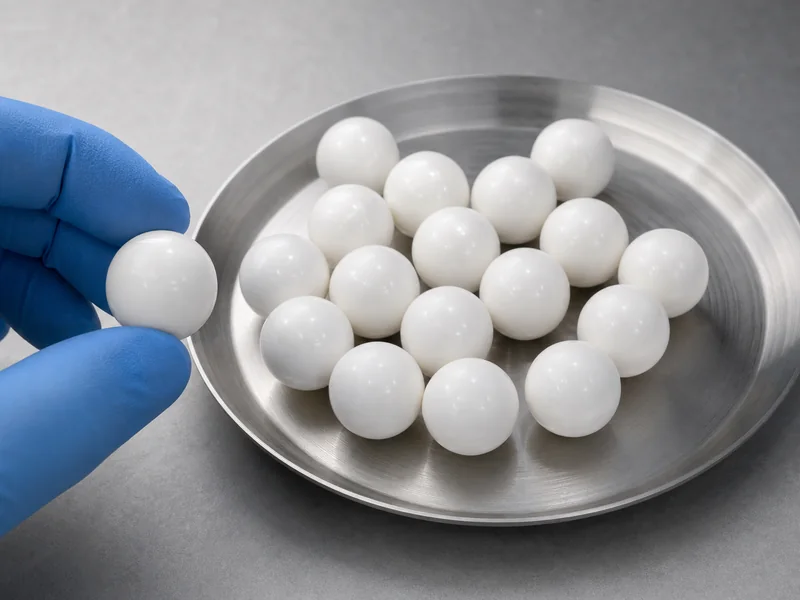
Large grinding balls
10.0–20.0 mm
Intended for compatible equipment and coarse or high-impact grinding tasks that require large ceramic media.
Shown: nominal 20 mm illustration — not to scale
Applications
Where YSZ Is Commonly Evaluated
YSZ is relevant when the process must combine efficient milling with control of wear-related contamination.
Before changing media
Confirm the Operating Window
- Mill type and chamber volume
- Separator screen or gap
- Current bead material and size
- Feed and target particle size
- Viscosity and solids loading
- Contamination limit
- Speed and bead filling ratio
- Cooling and temperature control
A technically suitable bead can still perform poorly if the separator, loading or operating speed is mismatched. Share the process conditions with the inquiry so the recommendation can be reviewed.
Technical data, sample or quotation
Start With the Process Information You Have
We can begin with your mill model, current media, material, feed size, target particle size and expected quantity. Unknown details can be clarified during the review.
Useful details to include
- Application material and formulation
- Mill brand or mill type
- Current bead size and result
- Feed and target particle size
- Trial quantity or annual requirement