
Products / Ce-TZP grinding media
Ceria Stabilized Zirconia Beads
High-density Ce-TZP grinding media with a specific gravity up to 6.2 g/cm³, developed for efficient milling of high-viscosity slurries and hard materials.
Ceria-stabilized zirconia belongs to the same zirconia media family as YSZ, but the CeO₂ stabilizer produces a different balance of density, hardness, toughness, colour, and application fit.
CeO₂
Ceria stabilizer
Up to 6.2 g/cm³
High specific gravity
0.3–3.2 mm
Standard size range
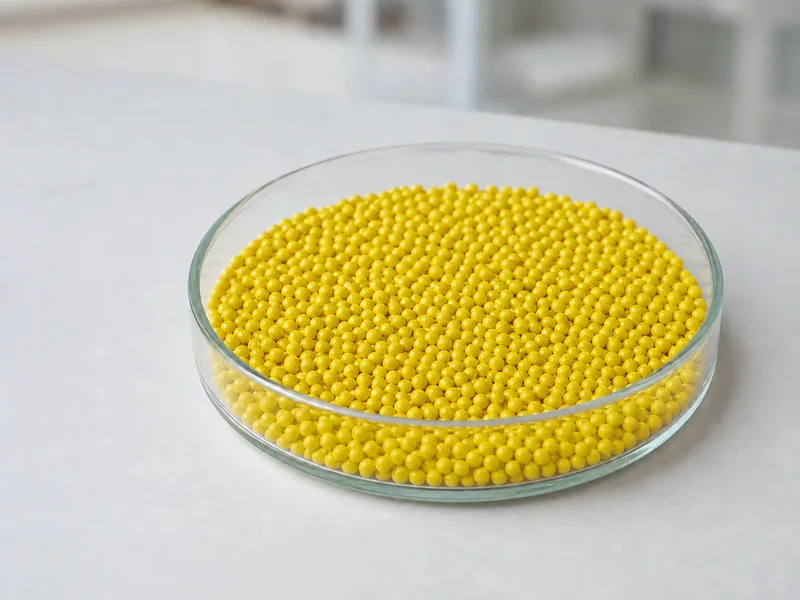
Variable colour
Cream, yellow, or dark brown
The key selection question
Ceria or Yttria Stabilized Zirconia?
Both are dense zirconia grinding media. The right choice depends on stabilizer chemistry, acceptable contamination, bead size, mill energy, and the economics of the complete production run.
Ceria stabilized
Ce-TZP Beads
| Stabilizer | Ceria (CeO₂) |
| Appearance | Pale cream and bright yellow to dark brown or black-brown |
| Mechanical balance | Strong toughness and fragmentation resistance; hardness is typically a little lower than premium YSZ |
| Density | Up to 6.2 g/cm³ for strong impact energy |
| Size strategy | 0.3–3.2 mm standard; special coarse-grinding balls can be discussed separately |
| Common fit | High-viscosity and hard materials, long runs, coatings, inks, battery materials, minerals and ceramic slurries |
Yttria stabilized
YSZ Beads
| Stabilizer | Yttria (Y₂O₃) |
| Appearance | White |
| Mechanical balance | Typically higher hardness and a fine microstructure for demanding high-energy, low-contamination milling |
| Density | Typically around 6.0 g/cm³ |
| Size strategy | 0.1–20 mm, including smaller media where the separator supports them |
| Common fit | Ultra-high-purity battery and electronic materials, pharmaceuticals, biotechnology, and strict chemistry-control tasks |
Practical distinction: consider Ceria when high slurry viscosity, hard feed, long-run toughness, and production-scale wear economics are central. Consider YSZ when yttria chemistry, white appearance, bead sizes below 0.3 mm or the strictest contamination requirements are more important. Validate both with the actual formulation whenever elemental pickup is critical.
Technical reference
Typical Product Parameters
These values describe the normal industry range for ceria-stabilized zirconia media. The quotation, sample label, and technical data sheet define the final grade-specific specification.
| Parameter | Typical reference | Process relevance |
|---|---|---|
| Material system | Ceria-stabilized tetragonal zirconia (Ce-TZP) | Dense ceramic engineered for repeated impact and friction in wet milling. |
| Stabilizer | CeO₂ (ceria) | Creates a toughness-focused mechanical balance distinct from YSZ. |
| Typical chemistry | ZrO₂ with approximately 16–20 wt% CeO₂ | Exact chemistry and minor constituents are confirmed for the supplied grade. |
| Specific gravity | Up to 6.2 g/cm³ | Supports high-impact energy in viscous slurries. |
| Bulk density | Approximately 3.7–3.8 kg/L | Useful for calculating media charge by chamber volume. |
| Vickers hardness | Approximately 1100–1200 HV1 | High ceramic hardness combined with strong toughness. |
| Nominal bead sizes | 0.3–3.2 mm standard | Covers micro, general-purpose and larger high-impact grades. |
| Shape and surface | Spherical, dense and smooth | Supports stable circulation and reduced abnormal wear. |
| Appearance | Pale cream, bright yellow, dark brown or black-brown | Shade varies with kiln, firing curve, formulation and trace impurities; colour alone is not a quality grade. |
| Recommended process | Wet grinding and dispersion | Commonly evaluated for long-duration and recirculation processes. |
Actual wear rate, service life, and throughput depend on the formulation, mill, speed, bead loading, temperature, separator, flow rate, and run time. Request a size-specific specification and sample before scale-up.
Product advantages
Built Around Stable Long-Run Performance
The useful difference is the combined behaviour of density, toughness, surface quality and wear over the complete milling cycle.
01
High media density
A specific gravity up to 6.2 g/cm³ provides strong impact energy in properly configured mills.
02
Tough ceramic structure
Ce-TZP is selected where resistance to chipping and fragmentation during repeated impact matters.
03
Wear stability over time
Dense microstructure and a smooth surface support predictable behaviour during extended runs.
04
Practical industrial range
The 0.3–3.2 mm range covers microbead, general-purpose, and larger high-impact duties.
05
Production-scale option
Ceria media is often evaluated where throughput, media life, and total operating cost must be balanced.
06
Colour needs context
Cream, yellow, and dark batches can all occur. Judge chemistry, density, and wear data—not colour alone.
Product views
Colour, Size Range and Surface Geometry
Three viewpoints show the product without distracting equipment or personnel.
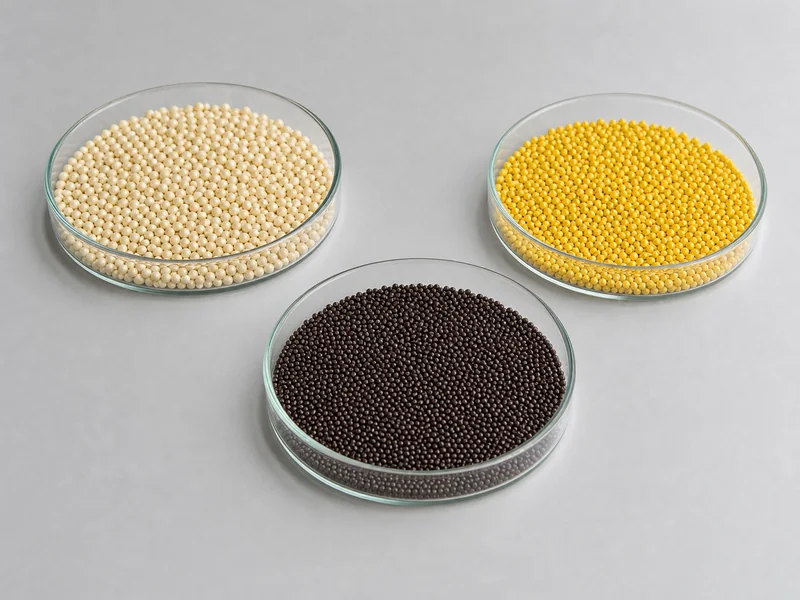
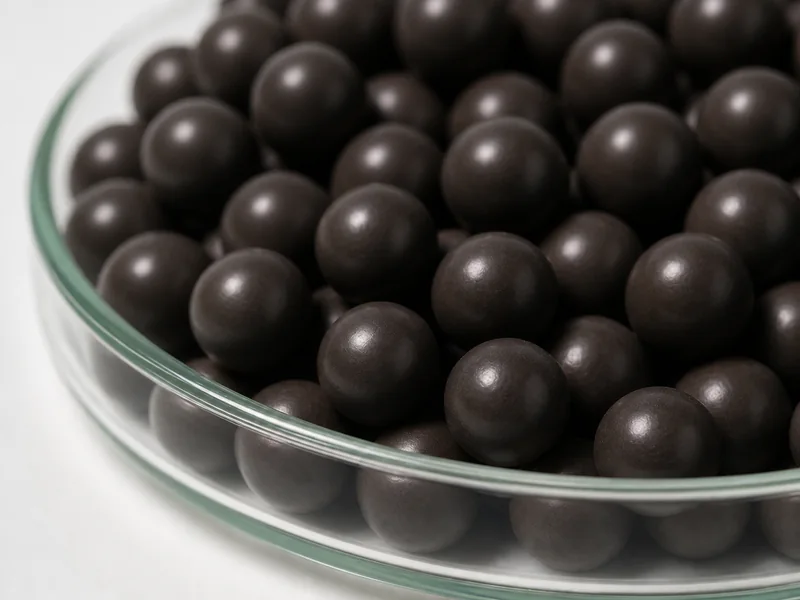
Images are product illustrations and are not to scale. Colour may vary because of kiln type, firing-temperature profile, formulation, and trace impurities such as iron or titanium. Confirm bead diameter, chemistry, density, and wear performance on the physical sample and specification.
Application difference
Where Each Zirconia System Usually Fits Best
These categories are selection starting points, not absolute rules. Material chemistry and contamination limits should decide the final media.
Often, a strong Ceria fit
Long runs and production-volume dispersion
Ce-TZP is commonly evaluated where consistent fine grinding, toughness, and long-run wear must be balanced with production economics.
- Automotive topcoats
- Industrial coatings
- Inkjet and packaging inks
- High-performance colour pastes
- Battery electrode materials
- MLCC and ceramic slurries
- Suspension-concentrate pesticides
- White minerals and fillers
YSZ is often preferred
Strict chemistry and small-media technical milling
YSZ is generally the safer starting point when yttria chemistry is specified, the smallest media are required, or contamination control is unusually strict.
- Ultra-high-purity battery materials
- Strict electronic materials
- Pharmaceutical ingredients
- Biotechnology
- Media sizes below 0.3 mm
- Yttria-specified ceramics
Contamination check: if cerium pickup, colour carryover, or formulation compatibility could be critical, compare Ceria and YSZ with timed slurry samples. Measure relevant elements, particle-size distribution, and media loss under equal conditions.
Size selection
Match Diameter to the Actual Milling Duty
Smaller beads increase contact frequency for fine dispersion. Larger beads provide greater impact per contact. Separator compatibility must be checked before changing size.
Microbead series
0.3–0.8 mm
Common grades: 0.3–0.4, 0.4–0.6 and 0.6–0.8 mm.
High bead count and dense contact points support ultrafine and submicron grinding.
Typical applications: inkjet inks, automotive topcoats, colour pastes and battery electrode materials.
Standard series
0.8–2.0 mm
Common grades: 0.8–1.0, 1.0–1.2, 1.2–1.4, 1.4–1.6, 1.6–1.8 and 1.8–2.0 mm.
The general-purpose range balances impact energy, contact area, separator requirements, and wear.
Typical applications: industrial coatings, packaging inks, MLCC slurry, pesticide SC and white minerals.
Large-bead series
2.0–3.2 mm
Common grades: 2.0–2.2, 2.2–2.5, 2.5–2.8 and 2.8–3.2 mm.
Greater mass provides stronger shear and impact for viscous slurry and coarse feed.
Typical applications: high-viscosity resins, adhesives, pre-grinding, and compatible large mills.
Sample & technical support
Compare Ceria and YSZ in Your Own Process
Send us the mill model, separator clearance, feed and target particle size, current media, run time, and contamination limits. We can help narrow the chemistry and bead-size options for a controlled trial.
Useful trial information
- Formulation and solids content
- Mill type and chamber volume
- Separator type and clearance
- Current bead size and material
- Target D10 / D50 / D90
- Relevant contamination limits